Radiotherapy Types

Radiotherapy can be given in many different ways. This page gives a short, plain-language introduction to each type — what it is, and when it is used. Your team will explain which type, if any, is right for you.

Quick links: What is radiotherapy? · Stereotactic radiotherapy · Proton beam therapy · IMRT and VMAT · 3D-conformal · Electron therapy · Brachytherapy · Breath-holding (DIBH) · AI in planning · 6DOF couch · Surface-guided (SGRT) · Cone beam CT (CBCT) · Image-guided (IGRT) · Adaptive radiotherapy · Total body irradiation (TBI) · Intraoperative (IORT) · Re-irradiation · BNCT · Gamma Knife · Carbon ion therapy

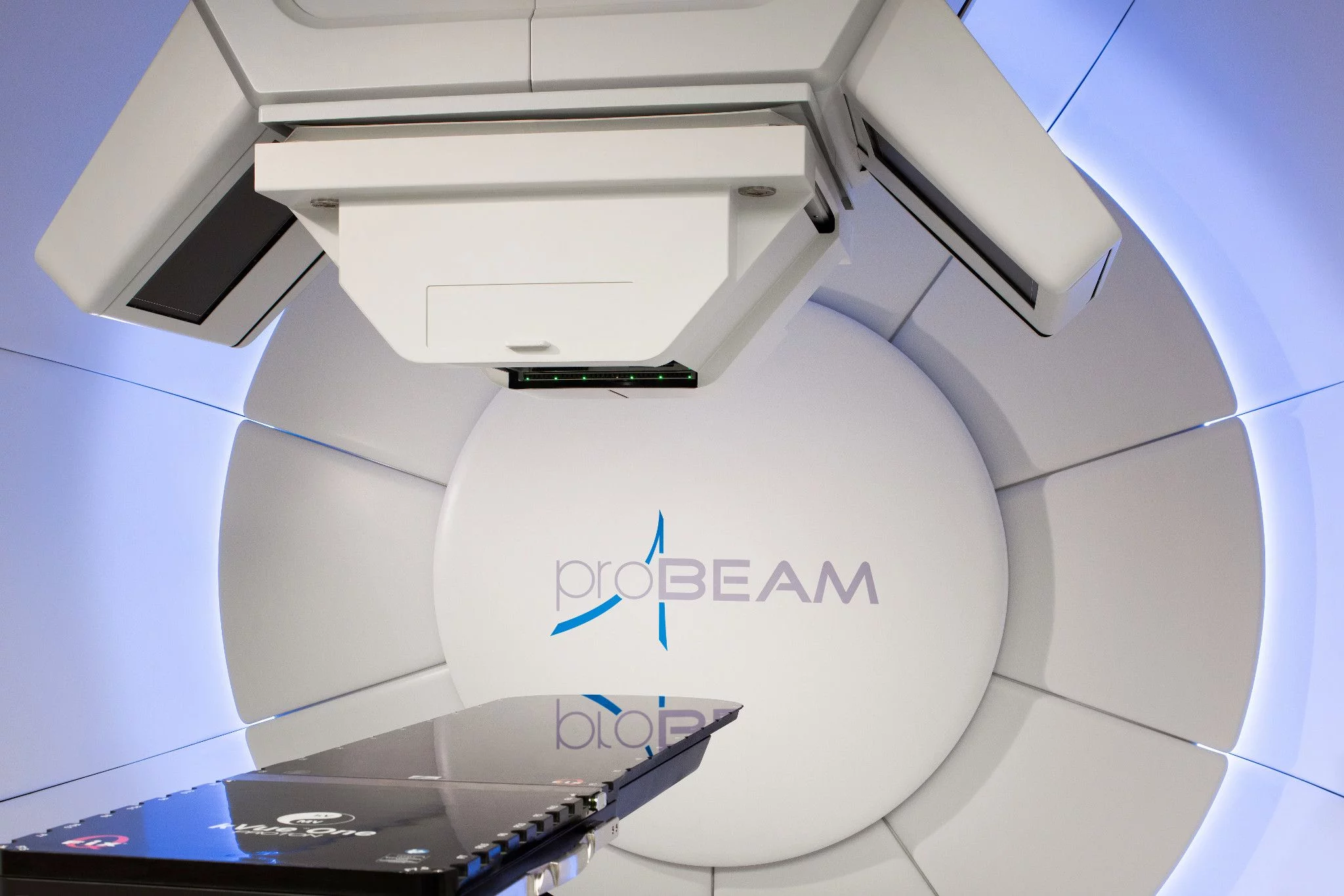
Proton beam therapy machine

What is Radiotherapy?

Radiotherapy uses ionising radiation to target and destroy cancer cells, or to shrink a tumour. It can be given from a machine outside the body, from inside the body, or with radioactive material. Modern radiotherapy aims to treat the cancer as effectively as possible while sparing healthy tissue nearby.
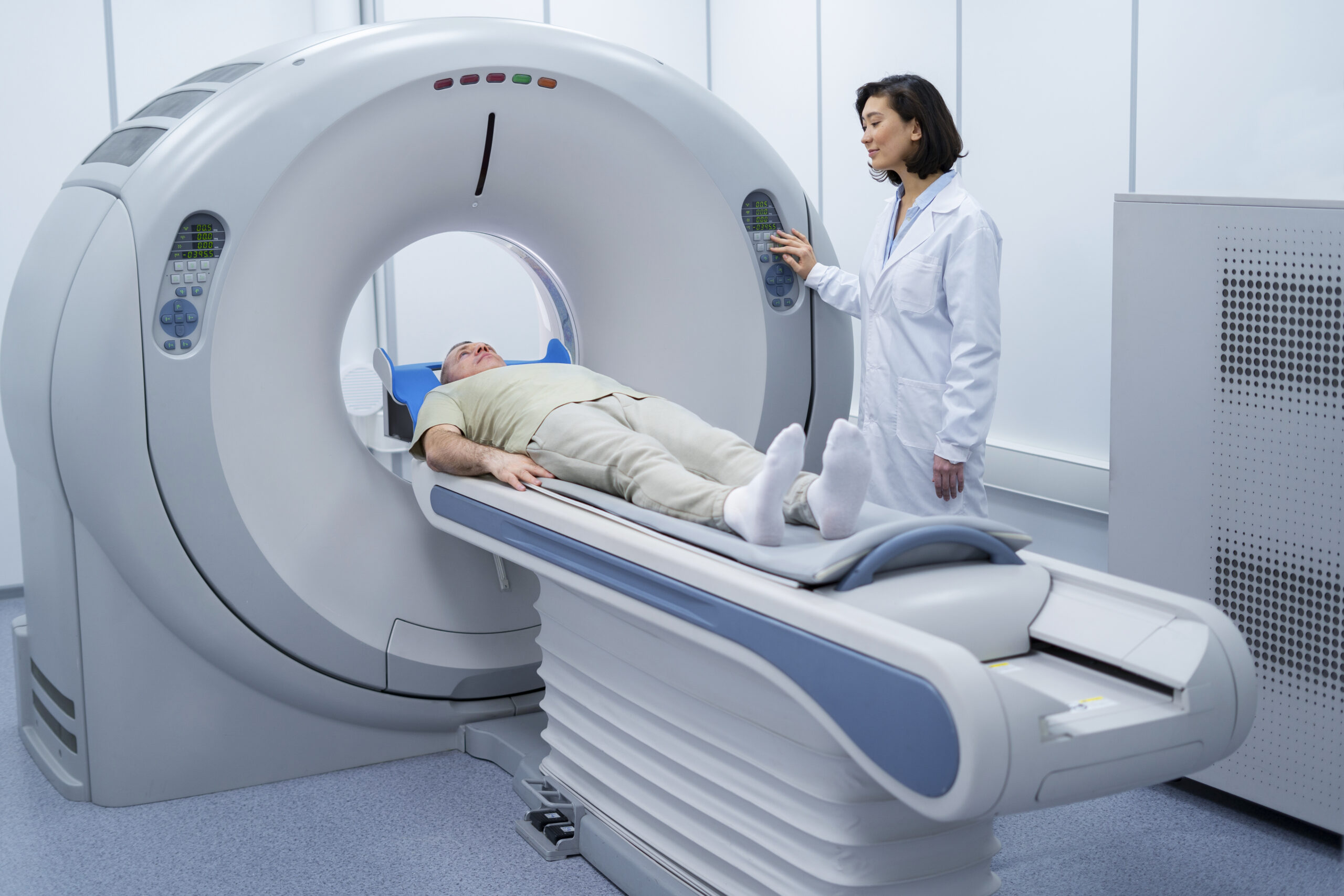
Doctor getting a patient ready for a CT scan

Stereotactic Radiotherapy

A very precise form of radiotherapy for small tumours, given in a few sessions. It is used for small brain tumours (radiosurgery), and for small tumours in the lung, liver or spine. It is given with systems such as Gamma Knife, CyberKnife, or a linear accelerator, and usually needs no surgery or hospital stay.
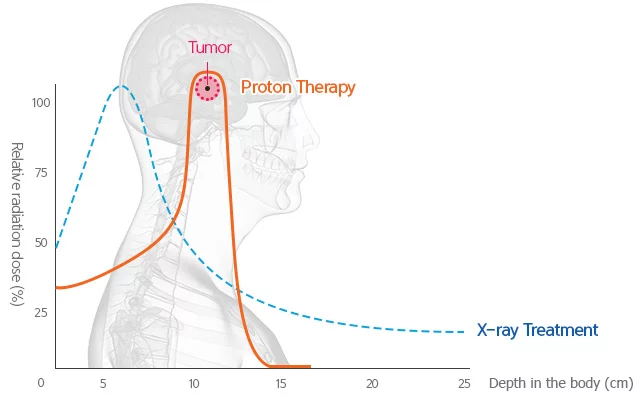
Diagram showing how protons release most of their energy at a set depth (Bragg peak)

Proton Beam Therapy

Proton beam therapy uses protons instead of X-rays. Protons release most of their energy at a set depth and very little beyond the tumour, which helps protect healthy tissue behind it. A modern form, intensity-modulated proton therapy (IMPT), shapes the dose closely around the tumour.
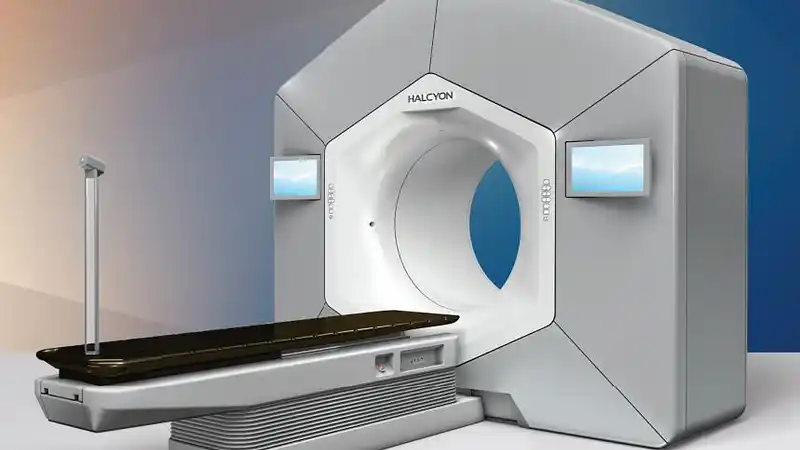
Halcyon radiotherapy machine

IMRT and VMAT

IMRT (intensity-modulated radiotherapy) and VMAT (volumetric modulated arc therapy) are precise forms of external radiotherapy. The strength of the beams is adjusted to shape the dose around the tumour and avoid healthy organs. With VMAT, the machine rotates around you while delivering treatment, so sessions are usually faster.
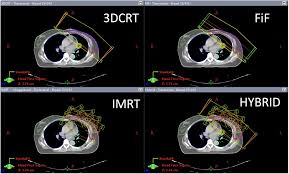
3D-conformal radiotherapy for breast cancer

3D-Conformal Radiotherapy

3D-conformal radiotherapy uses 3D scans to map the tumour, and shapes the radiation beams to match its outline. It is given from a few fixed angles. It is simpler than IMRT or VMAT, but effective for many straightforward treatments.
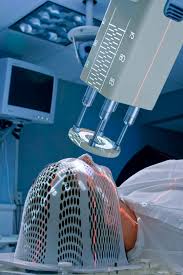

Electron therapy for skin cancerSkin Cancer Awareness

Electron Therapy

Electron therapy uses electron beams instead of X-rays. Electrons deposit most of their energy near the skin or just under it, so it is ideal for superficial tumours such as skin cancers or chest-wall tumours, while sparing deeper organs. It is not suitable for deep tumours.
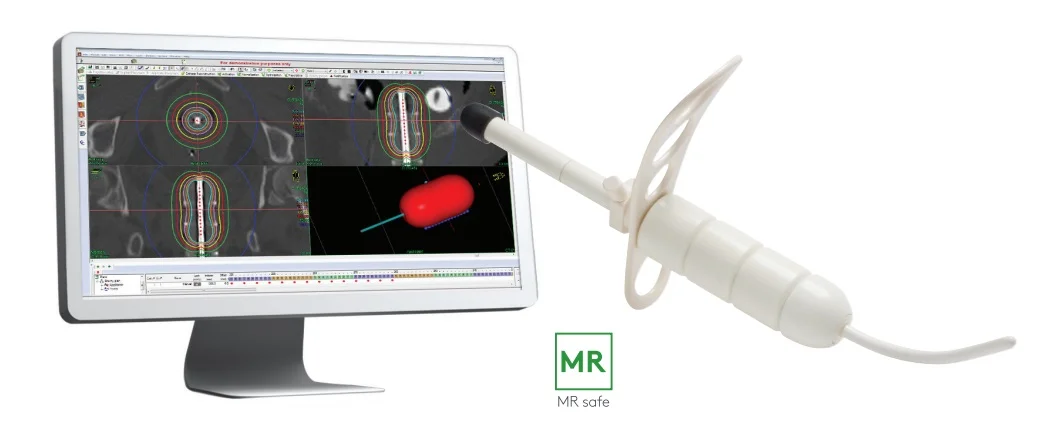
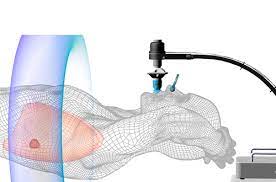
Brachytherapy applicatorImage showing radiotherapy gating for a lung tumour

Brachytherapy

Brachytherapy is internal radiotherapy — radiation is delivered directly inside or very close to the tumour, using a temporary or permanent radioactive source. This keeps the dose high where it is needed and low in surrounding healthy organs. It is commonly used for prostate and cervical cancers, often in a few sessions.
Breath-Holding Technique (DIBH)

With deep inspiration breath hold (DIBH), you hold your breath for a short time during treatment. This moves the heart and lungs away from the tumour, which is especially helpful for left-sided breast cancer, and reduces radiation to the heart and lungs. It takes some practice and coaching first.

AI in Radiotherapy Planning

Artificial intelligence software can help design a radiotherapy plan — mapping the tumour and nearby organs quickly, and suggesting beam angles that target the tumour safely. It can shorten planning time considerably, but it assists doctors and physicists; it does not replace them.

6DOF treatment couchInfrared cameras for patient positioning

6DOF Couch

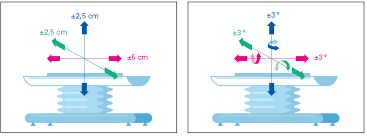
The 6DOF couch is a treatment table that can move in six directions — up and down, side to side, forward and back, and tilt or rotate. This helps position you very precisely, so the radiation hits the tumour exactly and healthy tissue is spared. It is often used for high-precision treatments.
Surface-guided radiotherapy system

Surface-Guided Radiotherapy (SGRT)

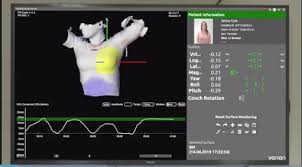
Surface-guided radiotherapy uses cameras or sensors to track the surface of your body in real time. It checks that you are in exactly the right position before and during treatment, and can detect small movements. It is often used for breast, head and neck, and other precise treatments, and can reduce the need for permanent skin marks.
Cone Beam CT (CBCT)

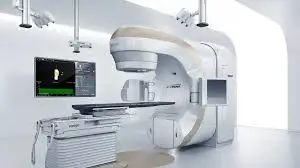
Cone beam CT is a 3D X-ray scan done on the treatment table, usually just before each session. It shows the tumour and nearby organs in detail, so the team can position you accurately and adjust for any small shifts. It is quick and is often used as part of image-guided radiotherapy.

Image-Guided Radiotherapy (IGRT)

Image-guided radiotherapy is not a separate machine — it is an approach that adds imaging checks to ordinary external radiotherapy. Pictures taken on the day of treatment, such as X-rays, cone beam CT or surface tracking, are compared with the planning scans, so each session is aimed as accurately as possible.

Adaptive Radiotherapy

Adaptive radiotherapy adjusts the treatment plan during the course of treatment, if the tumour or the body has changed since the original plan was made — for example, if a tumour has shrunk or an organ has shifted. New scans are taken, and a new plan is made and checked before it is used.

Total Body Irradiation (TBI)

Total body irradiation gives radiation to the whole body, rather than to one small area. It is a specialised treatment, used mainly as part of the preparation for a stem cell transplant (bone marrow transplant), to treat cancer cells in the blood and bone marrow.

Intraoperative Radiotherapy (IORT)

Intraoperative radiotherapy is given during surgery, while the area where the tumour was is still exposed. A focused dose of radiation is delivered to that area during the operation itself, while nearby healthy tissue is shielded as much as possible. It is used for some early breast cancers and some other tumours.

Re-irradiation

Re-irradiation means giving radiotherapy again to an area that has already been treated with radiotherapy before. This is usually considered when cancer has come back in or near the same area. The team carefully reviews the previous treatment and plans the new course to target the cancer while limiting radiation to healthy tissue treated before.

Boron Neutron Capture Therapy (BNCT)

BNCT is a very targeted form of radiotherapy that works in two parts: first a boron medicine is given as a drip, which cancer cells take up more than most normal cells; then a beam of neutrons is aimed at the tumour, and where a neutron meets a boron atom inside a cancer cell, energy is released right there. It is mainly used for cancers that have come back in a place already treated with radiotherapy. There is no BNCT centre in Singapore — treatment would mean travel, most often to Japan.

Gamma Knife Radiosurgery

Gamma Knife is a form of stereotactic radiosurgery — a very precise, single-session treatment for small areas in the brain. Despite its name, there is no cutting and no incision: many narrow beams of gamma rays meet at one small target, so the dose is high there and much lower in the healthy brain around it. It is available in Singapore, including at National University Hospital and Mount Elizabeth Hospitals.

TrueBeam radiotherapy machine

Carbon Ion Therapy

Carbon ion therapy is a type of particle therapy, like proton therapy, but using carbon ions — heavier particles — instead of protons. Like protons, carbon ions release most of their energy at a set depth and very little beyond the tumour. It is used for a small number of selected cancers that are hard to treat with standard radiotherapy. There is no carbon ion centre in Singapore.

This page is general information only. Not every type of radiotherapy is available in Singapore, and not every type is right for every person. Please ask your treating team what applies to you.