General information only — not medical advice. Please follow your own treating team’s advice, especially if you have diabetes, bowel disease, kidney problems, allergies, or other medical conditions, or if you are taking medicines that affect your bowel.
Gas and bloating are common during radiotherapy to the abdomen or pelvis — for example, treatment for prostate, bladder, cervical, uterine, rectal, or anal cancer. They can be uncomfortable, and embarrassing to talk about. They are also important to mention to your team, because gas can affect treatment.
Why gas can be a problem during radiotherapy
Your bowel naturally contains gas. During pelvic or abdominal radiotherapy, the bowel can become more sensitive, and produce more gas, or move gas through more slowly. This can cause bloating, cramps, wind, and a feeling of fullness.
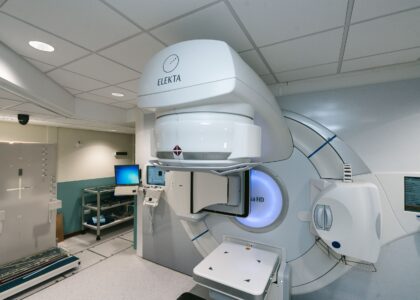
Gas can also affect treatment positioning. Radiotherapy is planned very precisely, based on scans taken before treatment. If there is a lot of gas in the bowel on the day of treatment, it can move the organs being treated — for example, the prostate, bladder, or bowel itself — slightly out of the position they were in when the plan was made.
That does not mean treatment will not work. Your radiographers check your position each day, and your team plans with some movement in mind. But reducing excess gas can help treatment be delivered as planned, and can make you more comfortable.
Your team may give you specific instructions about bowel preparation — for example, about emptying your bowel, drinking water, or taking a medicine before treatment. If they have, follow those instructions, and ask if anything is unclear.
Practical food and eating tips
You do not need a strict diet. Small changes to how and what you eat can help.
Eat slowly and calmly
- Eat slowly, chew well, and put your fork down between bites.
- Avoid talking a lot while eating, or eating in a rush — swallowing air can add to gas.
- Try not to eat on the move, or while very stressed.
- Sit up to eat, and stay upright for a while after eating if you can.
Little and often
- Smaller, more frequent meals are often easier than large meals.
- A large meal can stretch the stomach and bowel, and increase bloating.
- If you feel full quickly, try a small snack, and eat again in a couple of hours.
Keep a simple food note
- For a week or two, note what you ate, and when bloating or wind was worse.
- This can help you and your team spot patterns. It does not need to be detailed — a few words a day is enough.
- Bring the note to your appointment if it helps you explain what is happening.
Foods and drinks that commonly increase gas
Everyone is different. A food that causes gas for one person may be fine for another. The list below covers foods that commonly increase gas — it does not mean you must avoid all of them.
Commonly gassy foods:
- Beans, lentils, and chickpeas.
- Cabbage, cauliflower, broccoli, brussels sprouts, and onions.
- Very high-fibre foods eaten in large amounts, especially if you increase fibre suddenly.
- Spicy or very fatty foods, for some people.
- Sugar-free sweets, mints, and chewing gum sweetened with sorbitol, mannitol, or xylitol.
Drinks:
- Fizzy drinks, soda water, and beer — the bubbles add gas.
- Drinking through a straw, or from a bottle, can add swallowed air.
- Large amounts of fruit juice, or drinks sweetened with sorbitol, can increase gas for some people.
What may help:
- Plain water, and warm drinks such as weak tea, are often easier than fizzy drinks.
- Cooked vegetables are often easier than raw vegetables in large amounts.
- Soaking beans and lentils, and cooking them well, can help some people — but if they cause a lot of gas, it is reasonable to eat less of them during treatment, and add them back gradually afterwards.
- If you usually eat a lot of fibre, do not cut it out suddenly — that can cause constipation, which can also increase bloating. Aim for a steady amount, and talk to your team or dietitian about what is right for you.
Do not cut out whole food groups without talking to your team or a dietitian first, especially if you are losing weight or have other medical conditions.
Eating habits that can help
- Avoid chewing gum, and avoid smoking — both can increase swallowed air.
- Avoid sucking sweets or mints that make you swallow air, if they make bloating worse.
- Do not skip meals — an empty stomach can also increase gas and discomfort for some people.
- If you are constipated, tell your team. Constipation can trap gas and make bloating worse. They can advise on fluids, fibre, movement, and medicines.
Gentle movement
Gentle movement can help gas move through the bowel, and can reduce bloating.
- A short walk after eating can help, if you feel able.
- Gentle stretching, or lying on your side for a short time, helps some people.
- Avoid lying flat straight after a large meal if that makes bloating worse.
If movement causes pain, or you feel very unwell, stop and tell your team.
What to avoid
- Do not take over-the-counter anti-gas medicines, laxatives, or herbal remedies without checking with your team first — some can interfere with treatment, or with other medicines.
- Do not try a very restrictive diet, fasting, or a “cleanse” during treatment without talking to your team.
- Do not try to hold in wind for a long time if you are in pain — it is better to let it pass, and to tell your team if it is severe.
When to tell your treating team
Tell your team promptly if:
- Bloating, cramps, or wind are severe, or getting worse.
- You have severe abdominal pain, or your abdomen feels very swollen and hard.
- You cannot pass wind or stools, or you have not opened your bowels for several days.
- You have diarrhoea, blood in your stools, or vomiting.
- You feel very unwell, or have a fever.
- You are worried that gas is affecting your treatment — your radiographers can check your position, and your team can advise on bowel preparation.
Your team would rather hear about this early. Gas and bloating are common, they are not embarrassing to them, and there are ways to help.
After treatment
Gas and bloating often settle gradually after treatment ends, as the bowel recovers. For some people, bowel habits take longer to return to normal. If bloating, diarrhoea, or bowel urgency persist for weeks after treatment, tell your team — they can check for other causes, and refer you for dietitian or bowel support if needed.
This article is general information for patients and families. It does not replace advice from your own doctor, nurse, radiographer, or dietitian. If you are unsure about what is safe for you, please ask your treating team.