General information only — not medical advice. Every person’s treatment plan is different. Please follow your own treating team’s advice.
Starting radiotherapy can feel uncertain, especially if you have never had it before. This article explains, in plain language, what usually happens at your first appointments, so you know what to expect.
Your first consultation
Your first appointment is usually a consultation with your radiation oncologist. They will talk with you about your diagnosis, what radiotherapy can and cannot do in your situation, and what the treatment would involve. They will also ask about your general health, other medical conditions, medicines you take, and any allergies.
This is a good time to ask questions. You may want to bring a family member or friend with you, and to write your questions down beforehand, so you do not forget them in the moment. There is no such thing as a silly question — your team would rather explain something twice than have you go home worrying.
Your oncologist will also explain the possible side effects of radiotherapy for the part of the body being treated, and how your team will help you manage them.
Planning your treatment
Radiotherapy is not usually started on the same day as your first consultation. Before treatment begins, your team needs to plan it carefully. This planning stage usually takes a few days.
Planning usually involves:
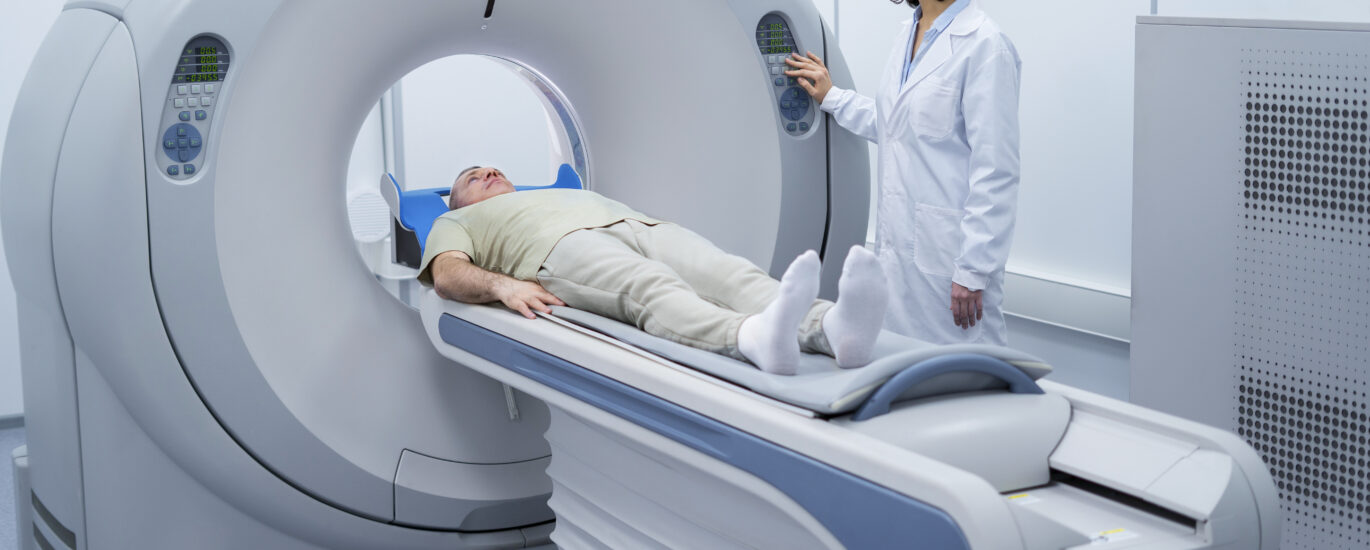
- A planning scan. This is usually a CT scan, taken while you lie in the same position you will be in for treatment. It is not a diagnostic scan — it is used to map exactly where the radiotherapy needs to go, and where the healthy organs nearby are.
- Marks or a mask. Small marks may be drawn on your skin, or a fitted mask or mould may be made, to help you lie in exactly the same position for each treatment. Your team will explain what is needed for your treatment, and how to look after the marks.
- A plan made just for you. A physicist and dosimetrist work with your oncologist to design a treatment plan for your body and your tumour. This is checked carefully before treatment starts.
You will usually be told when your first treatment will be, and how many sessions you will have, once planning is done.
Your first treatment session
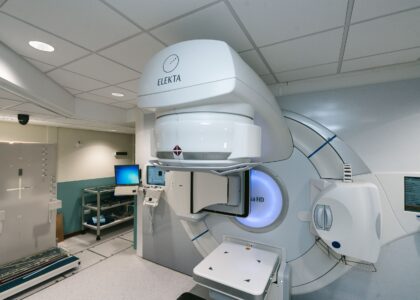
On the day of your first treatment, you will be shown to the treatment room and helped into position on the treatment bed. The radiographers (the staff who give the treatment) will use your marks, mask or mould, and the room’s lasers and imaging, to line everything up. This lining-up can take longer than the treatment itself, especially on the first day.
The treatment itself is painless. You will not feel the radiation, and you will not be radioactive afterwards, so it is safe to be around other people, including children, after your session. The machine may move around you and make some noise, but it does not touch you. You will be alone in the room during the treatment, but the team watches you on a camera and can hear you — you can talk to them at any time, and the treatment can be stopped if you need it to be.
Most sessions are short — often only a few minutes of actual treatment, with the whole visit taking longer because of the lining-up and checks. Your team will tell you how long to allow for each visit.
After your first session
You can usually go home straight after treatment, and most people carry on with their normal day. Some people feel tired, but many feel fine, especially in the first week. Side effects, if they happen, usually build up gradually over the course of treatment, rather than appearing all at once.
You will have regular check-ins with your team during treatment — often once a week — to see how you are doing, check your skin and general health, and answer any questions. Tell your team about any new symptoms, even if they seem small. It is much easier to help early than to wait until a problem becomes bigger.
Questions to ask at your first appointment
- How many treatment sessions will I have, and over how many weeks?
- How long will each visit take?
- Will I need a mask, mould or marks, and how do I look after them?
- What side effects should I expect, and when might they start?
- Who do I call if I have a problem between appointments?
- Can I eat and drink normally before treatment?
- Can I drive myself to and from treatment?
- Is there anything I should avoid, such as creams, sun exposure, or certain medicines?
The bottom line
Your first radiotherapy appointment is mostly about talking and planning. Treatment itself is painless, and you will not be radioactive afterwards. Knowing what will happen, and who to ask when you are unsure, can make the whole thing feel much less daunting. Your team is there to guide you through it, one step at a time.
This article is general information for patients and families. It does not replace advice from your own doctor, nurse, or radiographer. If you are unsure about anything in your treatment plan, please ask your treating team.