
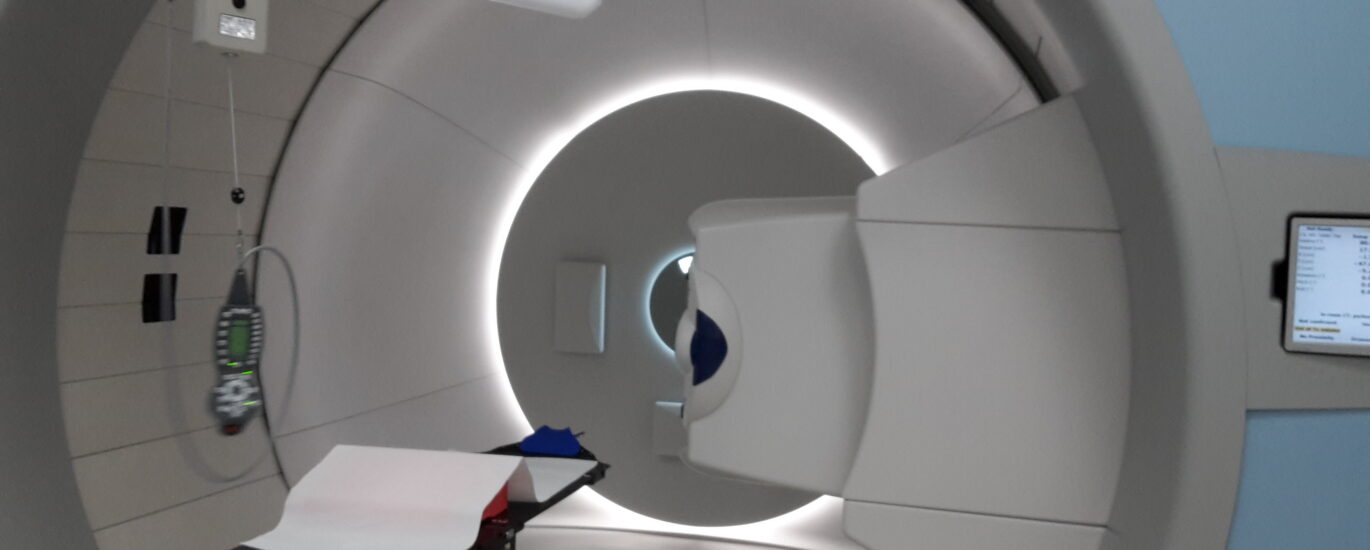
Proton therapy is a type of radiotherapy that uses protons instead of X-rays to treat cancer. It is available in Singapore at Proton Therapy SG, where Dr Wong Ru Xin is a Visiting Consultant. Dr Wong is a radiation oncologist at Icon Cancer Centre Singapore, and she received proton therapy training through the Ministry of Health’s HMDP programme.
This page explains, in plain language, how proton therapy works, who it may be considered for, and what having treatment is actually like. It is general information only — whether proton therapy is right for you depends on your individual situation, and that decision is made together with your care team.
How proton therapy works
- Most radiotherapy uses X-rays (photons). X-rays pass all the way through the body, giving some dose to the healthy tissue in front of and behind the tumour.
- Proton beams behave differently. Protons release most of their energy at a precise point — called the Bragg peak — and then stop. There is very little dose beyond the tumour.
- By adjusting the beam, the radiation oncologist can place that peak inside the tumour, so the cancer receives a high dose while nearby healthy tissue receives less.
- The treatment itself is painless, and you cannot feel the beam.
In short: proton therapy is a way of aiming radiotherapy more precisely, so that less healthy tissue is exposed — which matters most when the tumour sits close to important structures, or when the patient is a child.
Who is proton therapy commonly considered for?
Proton therapy is not needed for every cancer. It tends to be considered when sparing healthy tissue matters most, for example:
- Children and young adults — developing tissues are more sensitive to radiation, and reducing dose to healthy tissue may lower the risk of late effects and second cancers later in life.
- Brain and skull-base tumours — where the tumour is close to the brain, eyes, or spinal cord.
- Head and neck cancers — where sparing the salivary glands, mouth, and swallowing structures can make a real difference.
- Re-treatment (re-irradiation) — treating an area that has already received radiotherapy, where keeping the dose to surrounding tissue as low as possible is important.
- Selected other cases — for example some tumours near the heart, lungs, or spine, where the proton dose distribution offers a clear advantage over X-rays.
Your radiation oncologist will usually compare a proton plan with a conventional X-ray plan, and recommend protons when the comparison shows a meaningful benefit.
What treatment involves
- Consultation. You will meet Dr Wong to discuss your diagnosis, whether proton therapy is suitable, and what the alternatives are.
- Planning. A planning CT scan is taken in the treatment position. Sometimes a custom mould or mask is made to help you stay still and in the same position each day. The team then designs your individual treatment plan, which takes some days.
- Daily treatment. Proton therapy is usually given once a day, Monday to Friday, over several weeks. Each session takes around 30 to 45 minutes, most of which is careful positioning and imaging — the beam itself is on for only a few minutes.
- During treatment. You lie on the treatment couch and the machine moves around you. You will not feel anything, and you are not radioactive afterwards — it is safe to be around family, including children and pregnant women.
- Reviews. You will be reviewed regularly during treatment so any side effects can be managed early.
Side effects
Side effects depend mainly on which part of the body is treated, and are broadly similar in type to conventional radiotherapy — proton therapy reduces the dose to healthy tissue, but the tissue in and near the treatment area is still treated. Common themes include:
- Tiredness during the course of treatment.
- Skin redness in the treatment area, similar to sunburn.
- Area-specific effects — for example a sore mouth or altered taste with head and neck treatment, or hair loss within the treatment area for head treatments.
Most side effects build up gradually during treatment, peak shortly after it ends, and then settle over the following weeks. Your care team will explain the effects most relevant to your treatment area, and how they are managed.
Frequently asked questions
Is proton therapy suitable for every cancer?
No. For many cancers, modern X-ray radiotherapy is just as effective, and protons add benefit only in selected situations. Your radiation oncologist will advise whether a proton plan offers you a real advantage.
Does proton therapy hurt?
No. Treatment is painless — you will not feel the beam. Most of each appointment is spent getting you into exactly the right position.
How long is a course of treatment?
It varies with the condition being treated, but many courses run daily (Monday to Friday) over several weeks. Your team will confirm your schedule after planning.
Is proton therapy covered by MediSave or MediShield Life?
Coverage depends on the condition being treated and on current Ministry of Health rules, which change from time to time. The care team and the centre’s financial counsellors will check your situation and explain your options before treatment starts — please ask us, as the answer is different for different patients.
Where is proton therapy available in Singapore?
Proton therapy in Singapore is provided at Proton Therapy SG (1 Biopolis Drive, Amnios).
If you would like to know whether proton therapy may be an option for you, a consultation is the best next step — bring your scans and reports if you have them.
This page is general information and is not a substitute for medical advice about your own situation.