
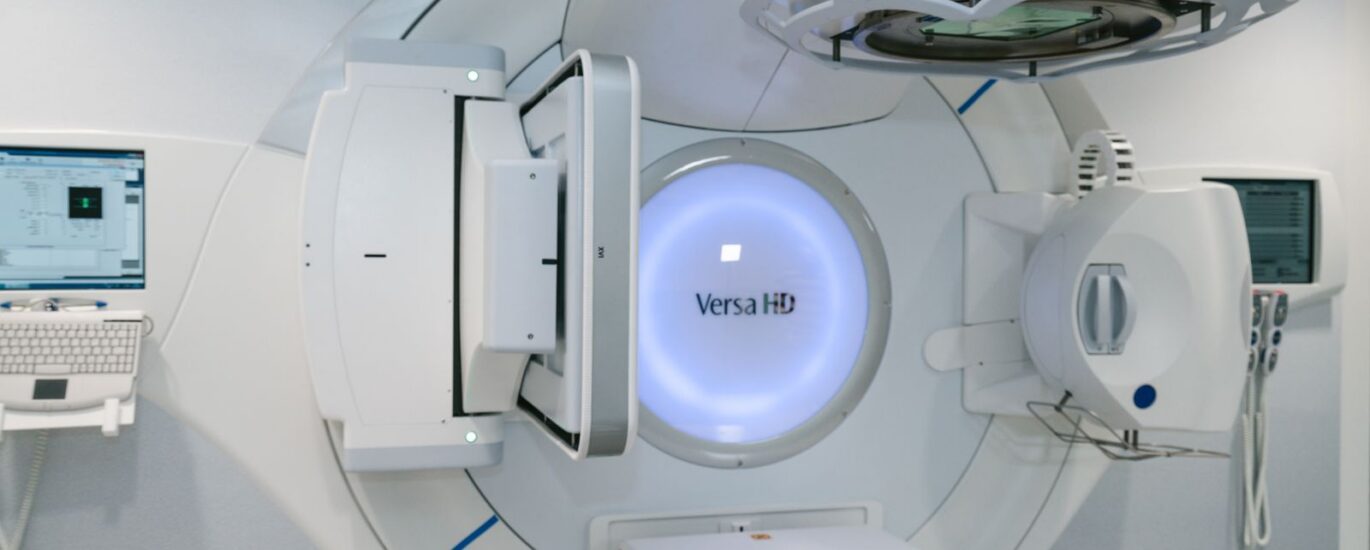
SBRT — stereotactic body radiotherapy, also called SABR — is a highly precise form of radiotherapy that delivers a high dose of radiation to a small target in just a few sessions, usually one to five. Because the dose is concentrated so tightly on the tumour, the healthy tissue around it receives much less.
Dr Wong Ru Xin is a radiation oncologist at Icon Cancer Centre Singapore (Mount Alvernia and Farrer Park) who provides SBRT as part of her practice. This page explains what SBRT is, what it is commonly used for, and what treatment involves. It is general information — whether SBRT is suitable depends on the size and position of the tumour and your overall health.
How SBRT works
- Standard radiotherapy spreads a modest dose over many sessions. SBRT instead uses many precisely aimed beams, advanced imaging, and careful immobilisation to deliver a much higher dose per session to a small, well-defined target.
- Because each session is a large dose, accuracy is critical. Treatment is planned on detailed scans, and imaging is used at every session to confirm the target position before the beam is switched on.
- The sharp fall-off of dose beyond the target is what allows a high, cancer-controlling dose to be given safely in so few sessions.
- SBRT is a non-invasive, outpatient treatment. There is no surgery, no anaesthetic, and no incision — despite sometimes being described as “radiosurgery” when used in the brain (where it is called SRS).
What SBRT is commonly used for
SBRT is considered in a number of situations, including:
- Early-stage lung cancer in patients who are not fit for, or who prefer to avoid, surgery.
- Liver tumours — both cancers that start in the liver and selected cancers that have spread there.
- Spine tumours — where precision matters because the spinal cord is nearby.
- Prostate cancer — as a shorter alternative course of radiotherapy for suitable patients.
- Oligometastases — when cancer has spread to only a small number of sites (for example in the lung, liver, or bones), SBRT can be used to treat each site, sometimes alongside drug treatment.
- Re-treatment — in selected cases, treating a tumour in an area that has had radiotherapy before.
Not every tumour can be treated with SBRT. Size, position, and closeness to sensitive organs such as the bowel all matter, and your radiation oncologist will advise whether it is a safe and sensible option for you.
What treatment involves
- Consultation and scans. You will meet Dr Wong to discuss whether SBRT is suitable. Recent scans are reviewed, and sometimes additional imaging is arranged.
- Planning session. A planning CT scan is taken in the treatment position. A custom mould, vacuum cushion, or frame may be used to keep you comfortably still, and small marks may be placed on the skin to help with positioning. For tumours that move with breathing, the team will plan how to account for that movement.
- Treatment sessions. SBRT is usually given in one to five sessions, on separate days. Each session takes longer than a standard radiotherapy session — often 30 to 60 minutes — because positioning and imaging checks are so thorough. The treatment itself is painless.
- Afterwards. SBRT is an outpatient treatment and most people go home the same day and carry on with normal activities. You are not radioactive at any point.
Side effects
Side effects depend on where in the body the tumour is, because it is the tissue near the target that may be affected. In general:
- Tiredness is common for a few weeks after treatment.
- Lung treatments can cause breathlessness or a cough some weeks later, from inflammation in the treated part of the lung; chest wall soreness or, occasionally, a rib fracture can occur with tumours near the chest wall.
- Liver treatments can cause nausea and temporary changes in liver blood tests.
- Spine treatments can cause a temporary flare of pain in the first few days.
- Prostate treatments can cause urinary frequency or urgency and bowel looseness for a few weeks.
- Abdominal treatments can cause nausea, cramps, or diarrhoea, and tumours very close to the bowel are sometimes not suitable for SBRT for this reason.
Your team will explain the specific risks for your treatment site before you consent, and most side effects are mild and settle with time and simple medication.
Frequently asked questions
Is SBRT the same as surgery?
No. SBRT is sometimes an alternative to surgery — for example for early lung cancer in patients who cannot have an operation — but it involves no cutting and no anaesthetic. Your team will explain how the options compare in your situation.
How many sessions will I need?
Usually between one and five, depending on the site and size of the tumour and what is around it. Your radiation oncologist will confirm the number after planning.
Does it hurt? Will I feel anything?
No. Treatment is painless. The main challenge is lying still on the couch for the length of the session.
How soon can I get back to normal activities?
Most people resume normal activities the same day or the day after each session. Tiredness may build over the following weeks, so pace yourself.
Is SBRT suitable for cancer that has spread?
Sometimes. When spread is limited to a few sites (oligometastases), SBRT can treat those sites precisely, often together with drug therapy. This is decided case by case, usually in discussion with your whole care team.
If you have been told SBRT may be an option — or you would like a second opinion on whether it could help in your case — a consultation is the best next step. Bring your scans and reports if you have them. You can read more about Dr Wong on her profile page or her Icon Cancer Centre page. For selected cases, proton therapy is another precise option — see Proton Therapy in Singapore and Proton Therapy SG.
This page is general information and is not a substitute for medical advice about your own situation.